Why a Passing Inspection in McLean Doesn't Mean What You Think It Means
September 3, 2026
September 3, 2026
You get the report back and it's clean. No red flags on the roof, no cracks in the foundation, HVAC running fine, panel up to code. Champagne moment, right up until closing.
Except in McLean's older neighborhoods, that clean report may have never tested for the three things most likely to cost you money after you move in. A standard home inspection is a visual walk-through of accessible systems. It does not test for radon. It does not scope the sewer line. It does not check for asbestos in the flooring. Those are add-ons, and in most of the country they're optional add-ons. In McLean, for a house built before 1980, they're closer to essential, and the reason has less to do with the house than with what the market has decided the house is worth.
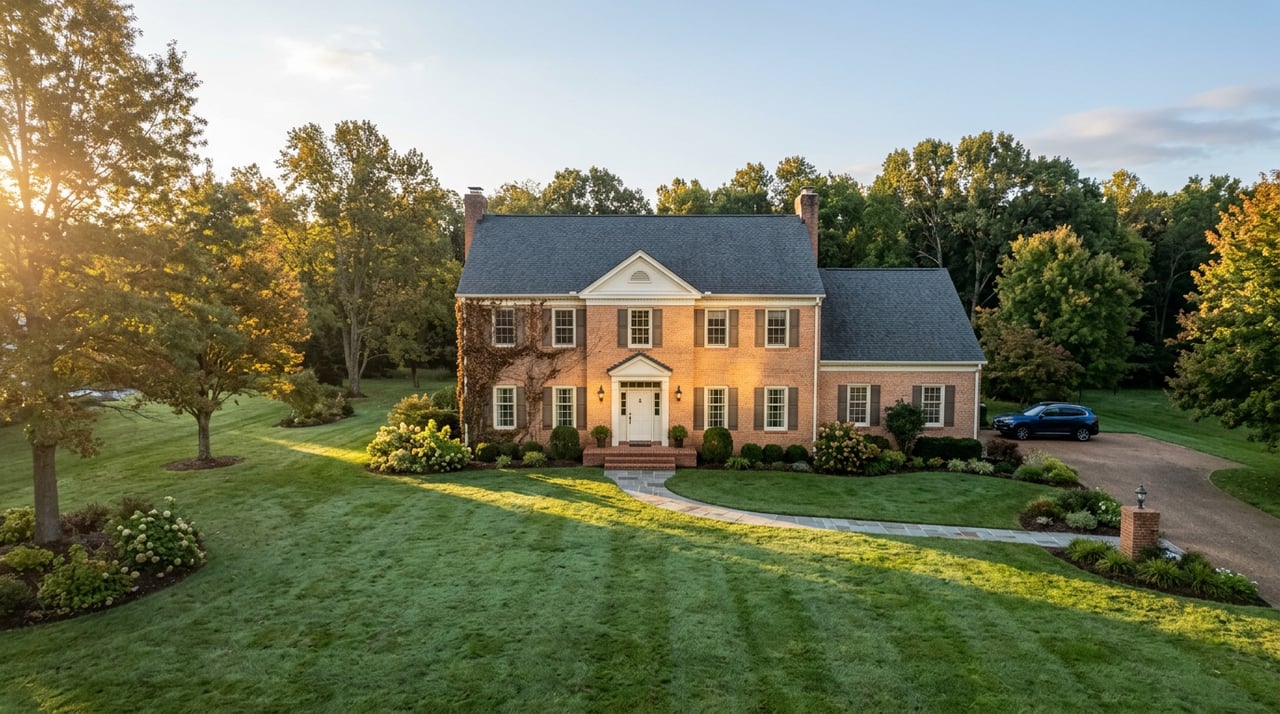
Walk through Salona Village, Chesterbrook, McLean Hamlet, or Langley Forest and you'll see the pattern before anyone explains it to you. One local demolition contractor's own project log describes a recent job in McLean Hamlet: a 4,200-square-foot mid-century colonial demolished and the site graded in three days, with a custom builder mobilizing the following week to start an 8,200-square-foot replacement. That contractor has put the underlying economics plainly, that in much of the McLean market the land itself is worth more than the structure sitting on it, and buyers regularly purchase mid-century homes in neighborhoods like these for lot value alone before the home comes down. The same source notes that nearly every home built before 1980 in McLean's established neighborhoods contains some asbestos, since 9x9 floor tile was standard through the 1950s and 1960s.
Here's the friction that follows from that. If the market treats an older McLean home as a lot with a disposable structure attached, nobody along the way has much incentive to price in the condition of that structure. The seller isn't required to volunteer much about it. The comps an agent might reference are frequently land sales, not resale of a livable house. And a buyer who plans to actually live in the place, not demolish it, can walk into closing having priced a house the way the market prices dirt.
Virginia is a buyer-beware state. The Residential Property Disclosure Statement that state law requires is not, despite the name, a detailed accounting of a home's condition. The Virginia Department of Professional and Occupational Regulation lists it alongside a handful of narrower disclosure forms covering things like septic waivers and stormwater facilities, and legal guidance on the statute is consistent that the form mostly tells buyers the seller makes no representations about the property and advises them to do their own due diligence.
That's not a loophole specific to teardown-adjacent homes. It's the baseline for every home sale in the state. But it lands harder in a market where the structure's condition is already treated as an afterthought. If the seller has no legal obligation to flag a slow leak, a tired sewer line, or old shingle siding, and the market has already discounted the structure to something close to zero, the only party left to check is you.
Federal law fills in one specific gap. For any home built before 1978, sellers must give buyers an EPA-approved pamphlet on lead hazards, disclose any known lead-based paint conditions, and provide a ten-day window to conduct a lead inspection or risk assessment before the contract becomes binding. That rule is meaningful in McLean, where a large share of the older housing stock predates 1978 by a decade or more. It is also the only disclosure obligation in this entire picture that isn't optional or contingent on the seller's own knowledge.
Fairfax County sits in EPA Radon Zone 1, the agency's highest risk tier, meaning the predicted average indoor screening level across the county exceeds the 4 picocuries per liter action threshold. The county's own health department page recommends testing every home regardless of what the zone map suggests, since results vary block to block and even house to house. A standard inspection does not include this test. You have to ask for it.
The same is true of a sewer scope, a camera run down the line from the house to the street connection. Cast iron pipe was standard in older construction and it can deteriorate from the inside with no visible symptom in the house itself. For any McLean home more than 20 years old, that's not a nice-to-have.
Then there's the asbestos question, which the general inspection also skips. Given how common ACM turns out to be in pre-1980 flooring, pipe insulation, and other materials across these neighborhoods, a buyer planning renovation work, even modest kitchen or bathroom updates, benefits from knowing what's under the surface before a contractor finds out mid-demolition. And for homes that predate natural gas becoming standard, an oil tank search matters too. Underground tanks that were decommissioned without proper documentation can create remediation costs that surface only after you own the property.
None of these are exotic requests. They're the specialty inspections that matter most given what's actually common in this specific housing stock, and none of them show up on a general inspector's checklist by default.
Virginia's standard purchase contract gives buyers a defined inspection period, typically seven to ten days, to complete all inspections and negotiate any findings. That window is tight enough that waiting on the general report before ordering specialty inspections can cost you days you don't have. For an older McLean home, it's worth ordering these alongside the general inspection rather than after it:
The land-value dynamic that shapes McLean's teardown market isn't going away. When local news outlet FFXnow covered the Knolewood subdivision in late 2025, a 24-lot community going up on one of the last undeveloped parcels in McLean near Lewinsville Road and Lancia Drive, the developers said the first section of road was on track to be paved that December, with the second section finished by February 2026. That timeline has since passed, and the project is a live reminder of how little raw land is left to build on in this part of Fairfax County. When land is that scarce, every existing house on a comparable lot gets valued, at least in part, as a stand-in for the land underneath it.
If you're one of the buyers planning to renovate an older home and live in it rather than replace it, that discernment needs to extend past the finishes and into the systems nobody's inspecting by default. The house may be priced like a lot. It still has a sewer line, a radon reading, and possibly a floor tile installed during the Eisenhower administration. Treating the purchase like everyone else in the neighborhood treats theirs, as a placeholder for a future rebuild, is a reasonable strategy if that's actually your plan. It's a costly assumption if it isn't.
Does Virginia require a radon test before closing? No. Testing is optional unless a lender requires it. Given Fairfax County's Zone 1 designation, it's worth requesting regardless of whether anyone requires it.
Is the seller required to tell me if there's asbestos in the house? Only if the seller has actual knowledge of it. Given how common asbestos-containing material is in pre-1980 construction across McLean, actual knowledge is a low bar to rely on.
How long do I have to complete inspections under a Virginia contract? The standard inspection contingency period runs seven to ten days from ratification, which is why ordering specialty inspections alongside the general one, rather than waiting on the results, matters.
Does the federal lead paint rule apply to every older home? Only homes built before 1978. It requires the seller to provide an EPA pamphlet, disclose known hazards, and give you a ten-day window for your own lead inspection before the contract binds.
If you're weighing an older McLean home against the cost and timeline of a full rebuild, or trying to figure out which specialty inspections actually apply to a specific property, Noble Homes Team can walk through the contingency period with you before you're up against the clock. Schedule a consultation and we'll help you figure out what this particular house, and this particular lot, actually need.


Your home is more than an address—it’s a reflection of your lifestyle. Partner with an expert who truly understands what luxury means.